Surgery is generally contraindicated in FOP, and any decision to proceed should be made with great caution and under the guidance of a specialist experienced in managing FOP.
2025
2025 was a remarkable milestone for the FOP Registry: ten years of empowering individuals with FOP and their physicians to share their unique medical journeys.
Right from the start, the FOP Registry has welcomed participants from around the world, ensuring that everyone living with FOP—regardless of location—can contribute their experiences.
Now more than ever, it makes sense to reflect on what a disease registry is—an important tool for researchers to better understand patient populations, disease prevalence, patient demographics, patient healthcare and treatment journeys, and patient health information that includes biological data about the disease. Importantly, registries can be powerful tools in the development and planning of clinical research studies and clinical trials.
Data from the FOP Registry has deepened our understanding of FOP, informed best practices in clinical care, and accelerated the search for new treatments. Each contribution has helped shape the global effort to improve the lives of those affected by FOP.
Over the past decade, the collective knowledge gathered from this remarkable community has become an invaluable resource. As we celebrate ten years of progress, we are proud to share highlights on key statistics and reflect on the impact that a decade of shared data has made possible.


Dear FOP Families and Friends of the FOP Registry,
From the moment I first learned of the IFOPA, I have been struck by this community surrounding FOP – our collective passion, focus, and drive to find a cure and make living with FOP even a little bit more manageable.
After having been your executive director for nearly 10 years, I know that with each year comes more progress toward that goal. And you – the FOP community – have been instrumental in that progress.
In fact, because of you, the FOP Registry now has 10 years of longitudinal data.
Ten full years of data that is owned by you, the community. Not by a private entity, or a pharma company, an individual, or even by IFOPA. It’s owned by you. And that means you, those who contribute their information to the FOP Registry, are directly responsible for the many publications that reference this data and the resulting advancements in our understanding of FOP.
In this year’s FOP Registry annual report, we’re looking back. You’ll see how various aspects of the FOP journey have changed over 10 years. How the number of people participating has changed. And how the entire amount of information on this ultra rare disease has grown significantly over these 10 years, thanks to you.
But we’re also looking ahead. We’re thinking about how the entire community counts on people like you to continue to participate into the future. And how newly diagnosed families can participate and help contribute the next 10 years of data.
Sincerely yours,

Michelle Davis
Executive Director
IFOPA
Demographics
THEN & NOW
Who is Participating in the FOP Registry?
2015
as of July 31, 2016
2025
as of April 28, 2025
23
Countries Represented
55
Countries Represented
1
Languages Represented
9
Languages Represented
(English, French, German, Italian, Korean, Polish, Portuguese, Spanish, Russian)
3 - 71
Age Range of
Registry Participants
2 - 71
Age Range of
Registry Participants
66.7% (n=54)
Female
57.5% (n=188)
Female
33.3% (n=27)
Male
Gender of Registry
Participants
42.2% (n=138)
Male
Gender of Registry
Participants
81
Total Number of
Registry Participants
327
Total Number of
Registry Participants
Percent of Participants at Enrollment by Continent
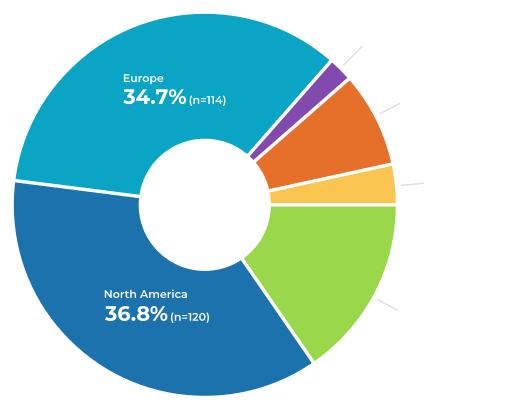

The total number of participants has increased by more than 300% over the past 10 years.
Demographics
THEN & NOW
Prevalence - “How Common is FOP?”
2015
as of July 31, 2016
Now
1 in 2 million people thought to have FOP
1 in 1 million people thought to have FOP
In 2021, a very important study was published using the FOP Registry data among other resources*. This study found that FOP is more common than previously thought.
In fact, it is possible that even this is an under-estimate for how common FOP is. The challenges in obtaining a correct diagnosis are widespread and occur as a result of the rarity of this disease.
* Pignolo RJ, Hsiao EC, Baujat G, et al. Prevalence of fibrodysplasia ossificans progressiva (FOP) in the United States: estimate from three treatment centers and a patient organization. Orphanet J Rare Dis. 2021;16(1):350. https://doi.org/10.1186/s13023-021-01983-2.

FOP Patient Demographics Today
Diagnosis Age (Years)
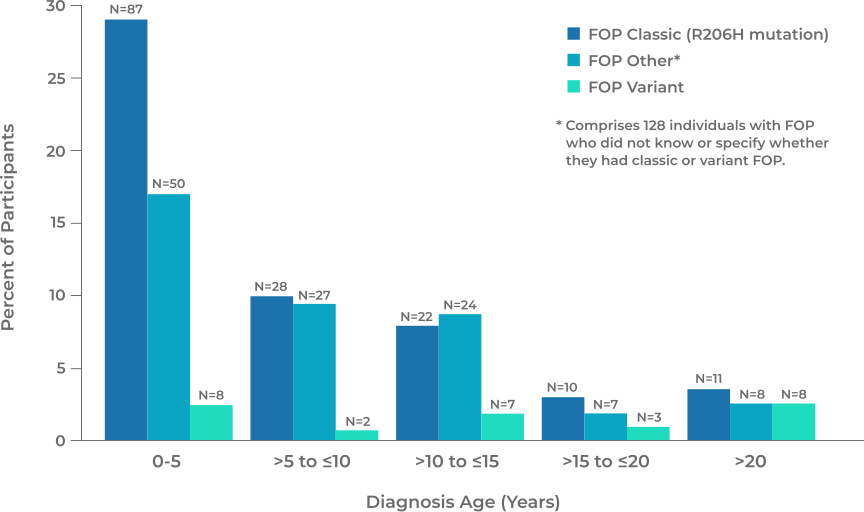
Demographics by FOP Type
FOP Patient Demographics Today
The FOP Community - Key Demographic Information
| FOP Classic | Mean Age | Median Age | Age Range | Number of Responses (N) |
|---|---|---|---|---|
| Current Age | 24.6 | 23 | 0.7 - 6 | N=164 |
| Age at First Symptom | 5.3 | 3 | 0 - 39 | N=156 |
| FOP Other* | Mean Age | Median Age | Age Range | Number of Responses (N) |
| Current Age | 31.4 | 31 | 4 - 68 | N=128 |
| Age at First Symptom | 6.6 | 4 | 0 - 42 | N=115 |
| FOP Variant | Mean Age | Median Age | Age Range | Number of Responses (N) |
| Current Age | 34 | 30 | 10 - 80 | N=31 |
| Age at First Symptom | 14.7 | 13 | 1.2 - 55 | N=29 |
*Individuals with FOP who did not know or specify whether they had classic or variant FOP.
Road to Diagnosis
THEN & NOW
At onset of symptoms, which doctor did participants visit first?
An early diagnosis of FOP is important for individuals with FOP to receive the correct care and therapy. Over the years, a wide range of healthcare providers (HCPs) have consistently been consulted when individuals first experience signs and symptoms of FOP.
Top 3 HCPs consulted at onset of symptoms in patients diagnosed before 2015
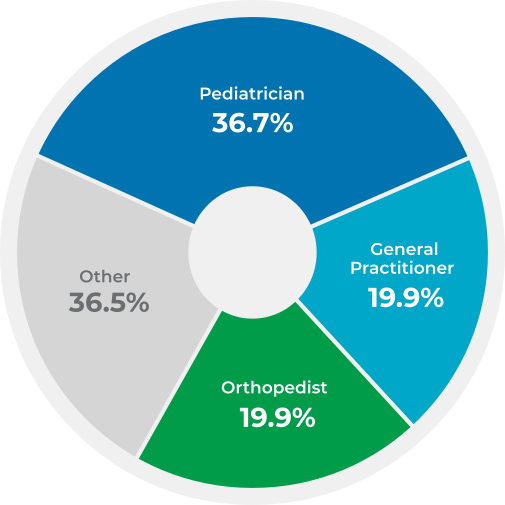
Top 3 HCPs consulted at onset of symptoms in patients diagnosed 2016-2020
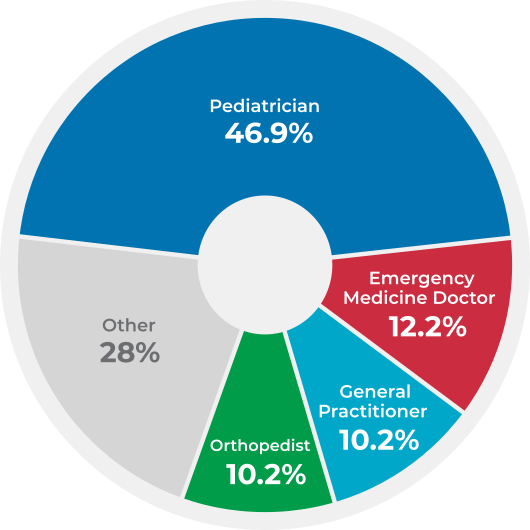
Top 3 HCPs consulted at onset of symptoms in patients diagnosed 2021-2025
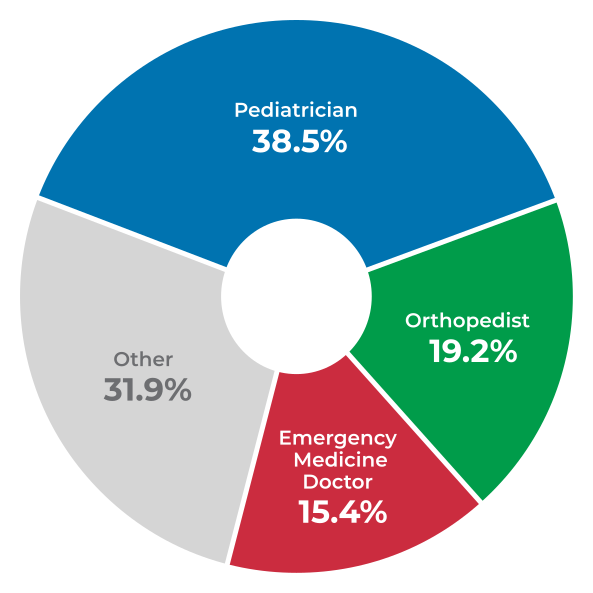
These Registry findings demonstrate the ongoing need for raising awareness of the signs and symptoms of FOP among pediatricians and other HCPs who provide routine and preventive healthcare services to children.
Road to Diagnosis
THEN & NOW
Which specialists provided the correct diagnosis?
The FOP Registry shows that a range of healthcare specialists are responsible for the correct diagnosis of FOP, including genetic confirmation of FOP.
Healthcare specialists correctly diagnosing FOP - before 2015
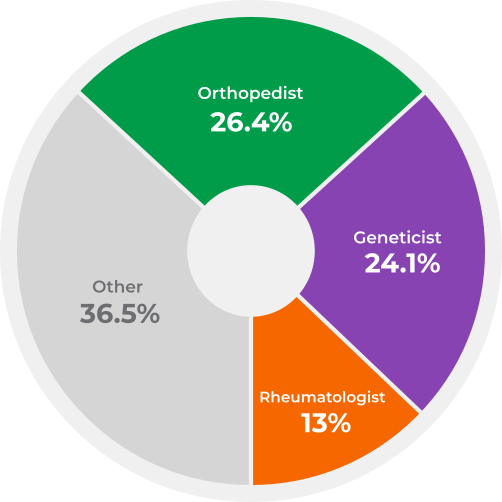
Healthcare specialists correctly diagnosing FOP - 2016-2020
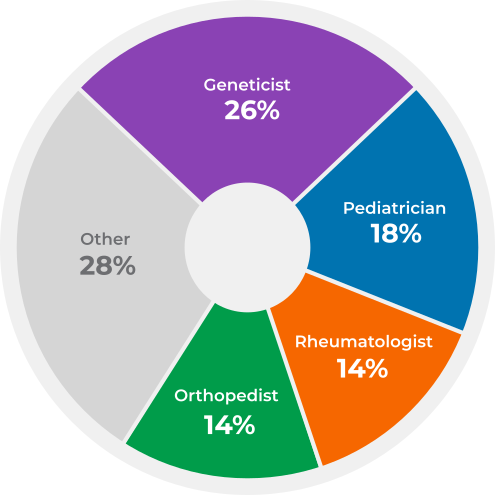
Healthcare specialists correctly diagnosing FOP - 2021-2025
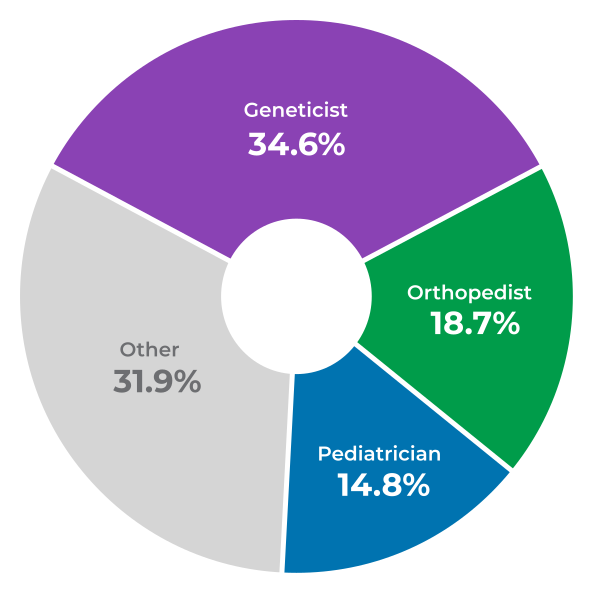
The top 3 specialists providing a correct diagnosis of FOP have remained fairly consistent over the past decade.
Road to Diagnosis
THEN & NOW
Number of specialists typically consulted before receiving an accurate diagnosis of FOP:

2
Individuals with FOP typically consult 2 specialists before receiving an accurate diagnosis, a pattern that has remained consistent over the years.
The path to a correct diagnosis of FOP is challenging. Misdiagnoses are a reality that can lead to unnecessary and potentially harmful therapies.

MISDIAGNOSIS TODAY
(n=184 individuals answered, n=127 reported misdiagnoses)
Misdiagnosis in FOP remains all too common, underscoring the continued need for disease information and awareness among healthcare practitioners. Here we see the wide range of misdiagnoses individuals reported receiving before they were correctly diagnosed with FOP.
Misdiagnosis has consequences in FOP
Given what we know about the disease course in FOP, a misdiagnosis can lead to serious consequences including bone formation due to inappropriate treatment or procedures. Data from the FOP Registry tells us that despite all the progress we've made together in increasing awareness of FOP and its presenting symptoms, too many people are being misdiagnosed.
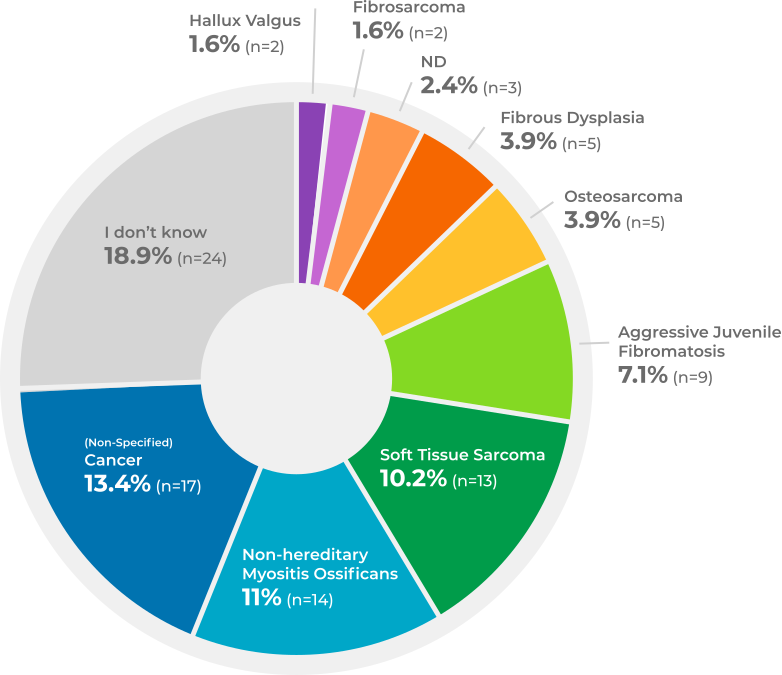
CANCER MISDIAGNOSIS
Road to Diagnosis
33 out of 183 individuals with FOP (18%) were initially misdiagnosed with cancer before receiving their correct diagnosis.
Among them, 17 individuals specified their type of cancer misdiagnosis:
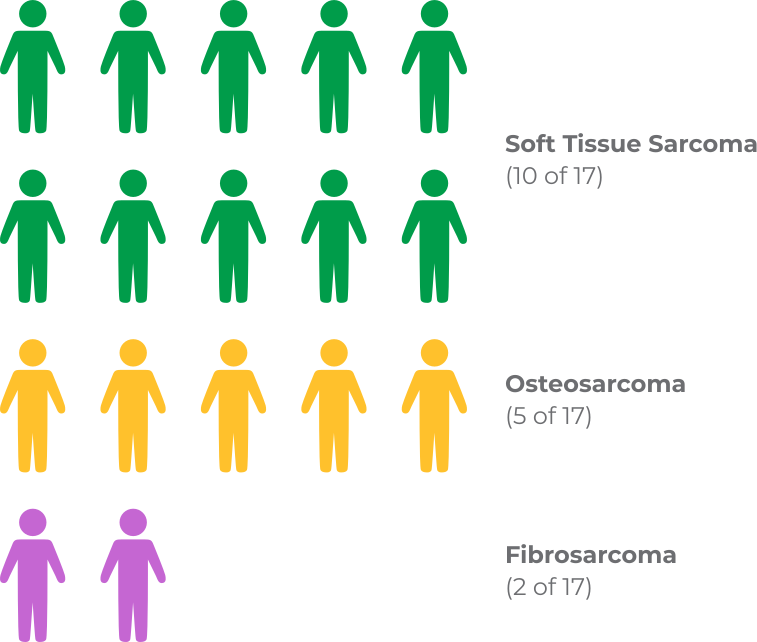
Each figure represents an instance of a specific cancer misdiagnosis reported
CANCER MISDIAGNOSIS
Road to Diagnosis
The 17 individuals who specified their type of cancer misdiagnosis went on to answer the remaining questions, whose answers revealed a disturbing reality. Too many people with undiagnosed FOP are receiving unnecessary and potentially harmful medical procedures before obtaining a correct diagnosis.
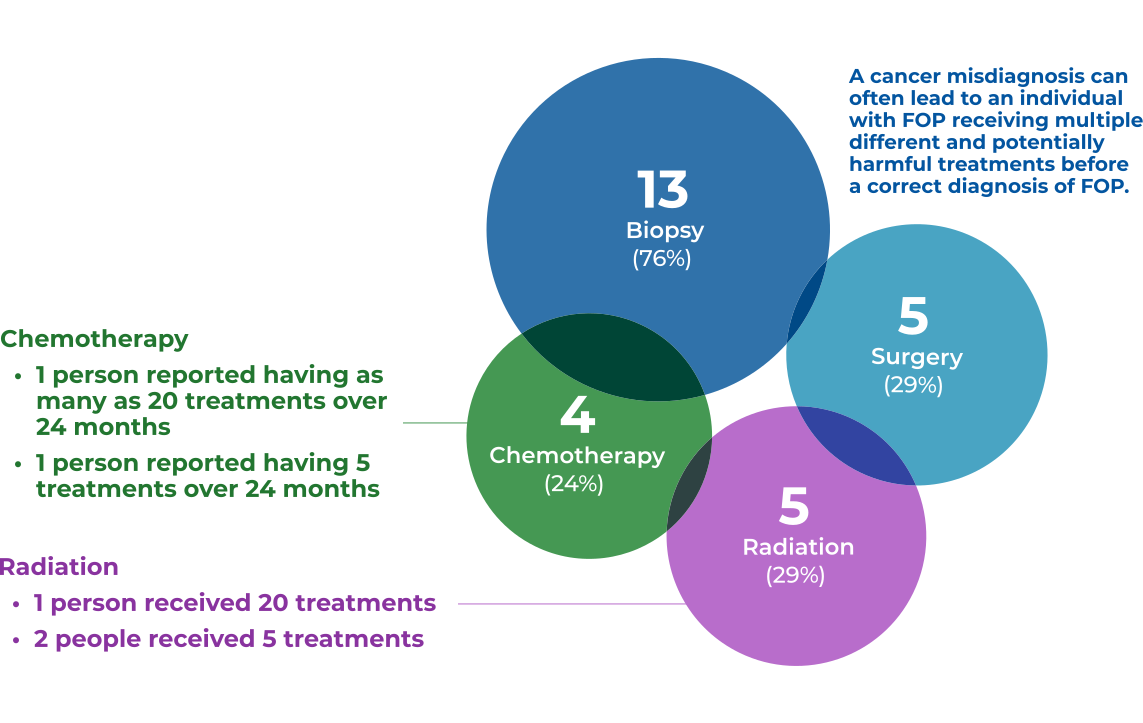

These data highlight the ongoing need for education about recognizing FOP and making a correct diagnosis as early as possible.
The State of FOP Research
THEN & NOW
Clinical Trials in FOP

Registry Growth and Clinical Trials
Along with the significant increase in the number of participants in the FOP Registry over the past 10 years, the number of clinical trials has also increased. And in 2022 and 2023, the first treatment for FOP was approved in Canada and the US, respectively.
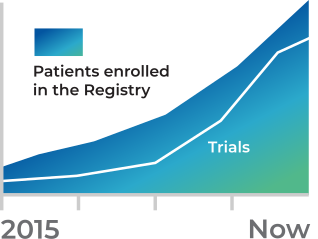
Clinical trial data obtained from the US Food & Drug Administration (FDA) clinical trial database at clinicaltrials.gov.
Before 2015
After 2015
2
Total Number of FOP Interventional Trials Before 2015
10
Total Number of FOP Interventional Trials Since 2015
2
Total Number of FOP Observational Trials
5
Total Number of FOP Observational Trials
5
# of Phase 2 Trials Testing Drugs for FOP
2
# of Phase 3 Trials Testing Drugs for FOP
1
Drug Approved in 5 Countries!
The FOP Registry as a Real-World Evidence Resource and Patient Reported Outcomes Data

PROMIS
Patient-Reported Outcomes Measurement Information System
The PROMIS® scale is a survey tool that evaluates and monitors the physical, mental, and social health of children and adults. Comparing data from individuals living with FOP from before and after 2019 suggests there has been an improvement in the overall well-being of individuals living with FOP.
Then
2015-2019 (N=84)
Now
2021-2025 (N=82-84)
Though unclear at this moment, the apparent improvements in well-being may be a consequence of several factors, such as improved management of FOP symptoms and access to new therapies through clinical trials and off-label treatments, to engagement with the FOP community through a network of international and national FOP organizations able to provide resources and support for individuals with FOP and their families.
NOTE: Data from 2020 was omitted due to the disruptive impact of the COVID pandemic.
Data from PROMIS reflects participant-reported mental health, physical health, and overall quality-of-life responses. Respondents were aged 15 years and older at the time of the study. The sample size varies by the number of responses to each question (N=67-84). The percent values indicate participants reporting positive outcomes (good or better for most measures).
Global Patient Insights Survey
Additional Patient-Reported Data
The Global Patient Insights Survey was a one-time survey that enabled participants to share additional information about their FOP journeys. These questions had not been previously asked in the Registry or other trials, studies, or surveys. The Survey asked crucial questions related to diagnosis, growth, clinical trial participation, pain, mobility, medications, and more. Here are some of the insights.

Spinal Curvature (n = 173 individuals answered these questions)

Scoliosis is a condition where the spine curves sideways in an “S” or “C” shape.

Kyphosis is a condition where the upper back curves forward more than normal, creating a rounded or hunched appearance.

64.2%
reported having scoliosis

28.2%
reported having kyposis
9.5 years
The average age at first presentation of scoliosis
12.4 years
The average age at first presentation of kyposis
26%
of individuals with scoliosis reported their scoliosis worsened with puberty
17.9%
of individuals with kyposis reported their kyposis worsened with puberty
Kyphosis is a condition where the upper back curves forward more than normal, creating a rounded or hunched appearance.
28.2%
reported having kyposis
12.4 years
The average age at first presentation of kyposis
17.9%
of individuals with kyposis reported their kyposis worsened with puberty

3 people had surgical correction for their scoliosis.
Surgery is generally contraindicated in FOP, and any decision to proceed should be made with great caution and under the guidance of a specialist experienced in managing FOP.
Global Patient Insights Survey
Additional Patient-Reported Data
Data from this Survey demonstrate that spinal complications affect the majority of individuals—often emerging in childhood—and circulatory issues and neuropathic pain impact nearly half the respondents. With surgical interventions not an option, patients may seek alternative pain management strategies, including CBD, though with mixed results.

Circulation (173 individuals answered these questions)

reported swelling in their lower extremities within the last 12 months

Neuropathic Pain (173 individuals answered these questions)

reported neuropathic pain (e.g. pins and needles) in an extremity within the last 12 months

CBD use (172 individuals answered these questions)
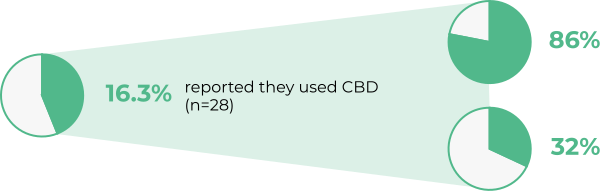
Of the people who use CBD (n=28), 24 reported using it for pain
Of the people who use CBD (n=28), 9 found it effective
Patient-reported data from the FOP Registry paints a fuller picture of life with FOP.
This Registry data, contributed by the FOP community itself, is essential to advancing clinical understanding, improving care strategies, and guiding research toward treatments that address the full spectrum of FOP’s impact.


REGISTRY ACCOMPLISHMENTS
Since 2015 Launch

Publications and Presentations from Registry Data
4
Presentations at international congresses and patient advocacy meetings
7
Publications
8
Annual Reports produced

Family Services and FOP Support
10
Family gatherings hosted since 2015

Other Important Milestones in FOP
2019
FDA Rare Disease Listening Session on FOP
2023
IFOPA and community members participated in the Ipsen palovarotene FDA Advisory Committee Meeting
REGISTRY ACCOMPLISHMENTS
Since 2015 Launch
Decade in Review

2019: Launched the Medical Portal within the Registry

2019: Introduced Android app

2019: Launched the Registry rewards program

2020: Developed FOP-PROMPT

2021: Launched iOS app

2021: Height and Weight Survey

2024: Patient Insights Survey
Share Your Story by Contributing Your Data at
FOPRegistry.org
Thank You to Our Registry Sponsors
Leadership Partner
Regeneron Pharmaceuticals
Collaborating Partners
Incyte Pharmaceuticals and Ipsen Pharmaceuticals
The FOP Registry would not be possible without our Medical Advisory Board members, Participant Advisory Board members, and Registry participants.
Special Thanks to:
Radiant Hope Foundation for the initial vision and funding support of the FOP Registry.
For further information about the IFOPA FOP Registry please contact:
Sammi Kile, Real-World Evidence Manager
sammi.kile@ifopa.org
Mark Hamilton, PhD, Director of Research
mark.hamilton@ifopa.org

©2026 IFOPA. All rights reserved.